Cartago
Costa Rica's first capital, in the east of the Central Valley.
About
What is Cartago?
Cartago is a province in the east of the Central Valley, south-east of San Jose. Its capital, the city of Cartago, was founded in the 1560s by Juan Vazquez de Coronado and was the capital of Costa Rica until 1823.
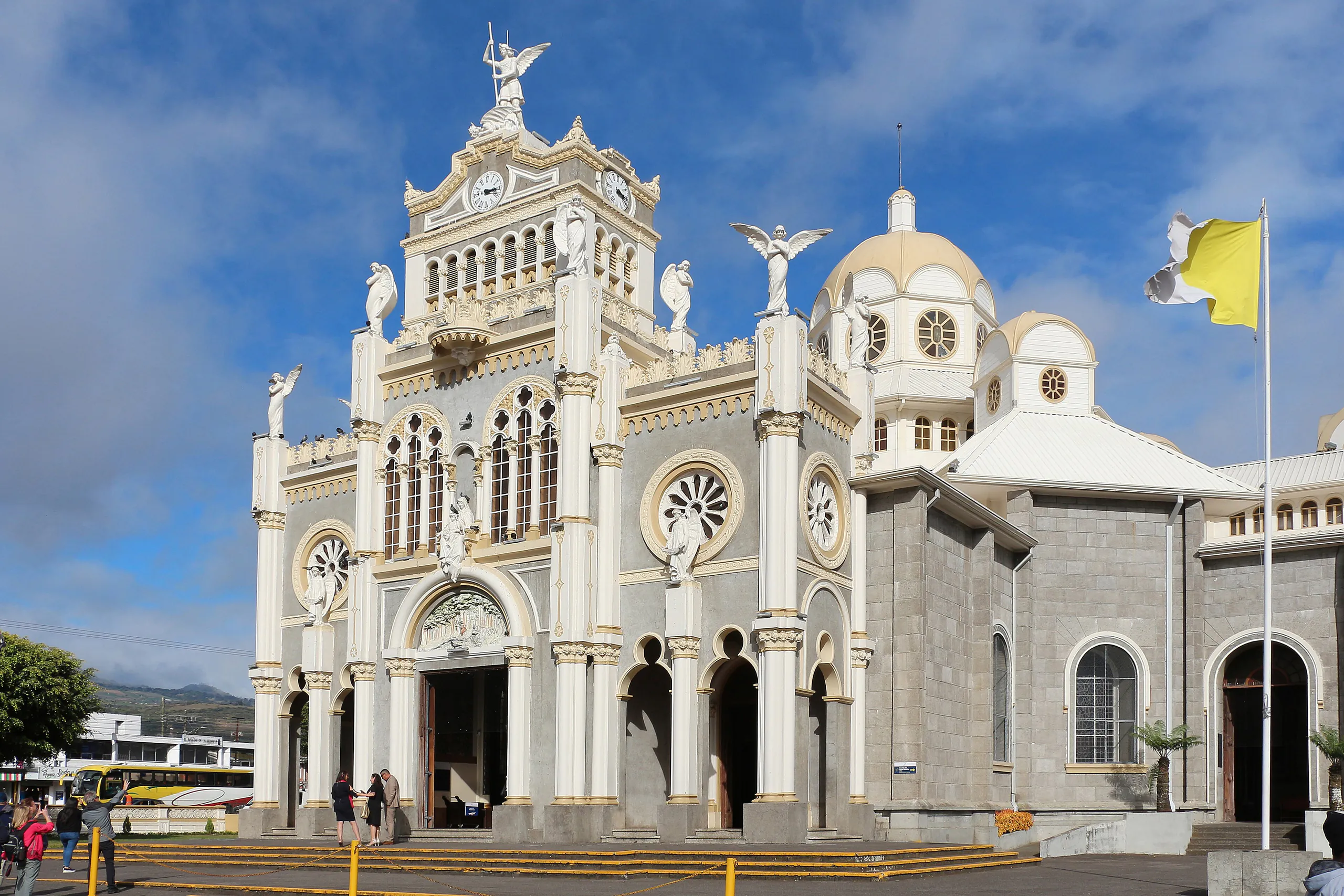
The city is the centre of the country's faith. The Basilica de Nuestra Senora de los Angeles, built between 1912 and 1930, keeps the image of the Virgin of the Angels, and every year pilgrims walk to it for her day, 2 August.
Earthquakes have shaped the city. The church of Santiago Apostol, begun in 1870, was never finished after the earthquake of 4 May 1910, the worst disaster in the country's seismic history, and its ruins stand in the centre of Cartago. It was in Cartago, too, that Costa Rica's act of independence was signed, on 29 October 1821.
Irazu Volcano, at 3,432 metres the highest volcano in Costa Rica, rises about 31 km from the city. To the south, the Orosi valley holds the church of San Jose de Orosi, finished in 1766 and the only colonial church still standing in the country, the ruins of Ujarras and Tapanti National Park.
Further east lies Turrialba, with its volcano, rafting on the Pacuare River, which runs between Cartago and Limon, and Guayabo National Monument, the most important preserved archaeological site in Costa Rica. The University of Costa Rica's Lankester Botanical Garden, devoted to orchids, is in Paraiso, close to the city of Cartago.
Location
Where is it?
Cartago lies east of San Jose, on the eastern side of the Central Valley. Its only neighbours are San Jose and Limon, and it has no coastline.
Juan Santamaria International Airport (SJO) is about 44 km from the centre of Cartago, around an hour by road through San Jose. Daniel Oduber Quiros International Airport (LIR) is about 245 km away, roughly four and a half hours by road.